Showing posts with label Sea Levels. Show all posts

Sunday, May 12, 2013

A Loss of more than just Agriculture

           Robin McKie, a science editor for the Observer, part of the Guardian, recently released an article entitled 'Climate Change 'will make hundred of millions homeless'' informing us of the carbon dioxide levels indicating a rise in temperatures leading to continental agricultural failure.  He tells us that millions will eventually be displaced from their current homes as an effect of global warming and climate change.  Temperatures are likely to rise up at 5 degrees Celsius which will cause a disruption in normal weather patterns including precipitation and drought.  There has been news of carbon dioxide levels reaching an astonishing 400 parts per million (ppm) with rates rising since the 1960's, now at 2.1 ppm/year.  Eventually these rising carbon dioxide emissions will create a feedback loop of rising temperatures to melting ice to loosing coastal lands and so on and so forth.  Changes need to happen and they need to happen soon.

The article can be found here: The Guardian | The Observer


McKie, Robin. " Climate change 'will make hundreds of millions homeless' | Environment | The Observer ." Latest US news, world news, sport and comment from the Guardian | guardiannews.com | The Guardian . N.p., 11 May 2013. Web. 12 May 2013. <http://www.guardian.co.uk/environment/2013/may/12/climate-change-expert-stern-displacement>.

The Impacts of Climate Change

There are obviously a multitude of ways that climate change will effect the world around us, whether it be the shrinking of glaciers, the extinction of species, the pollution in our air, rising sea levels, and even agricultural impacts.  These pictures show two ways, agricultural and freshwater impacts, that will be affected with the continuation of our current climate change.

A projected look at how agriculture throughout the world will change 
Threats for current freshwater supplies around the world
                                                  http://www2.sunysuffolk.edu/mandias/global_warming/images/various_water_impacts.jpg

Wednesday, May 8, 2013

Animal Endangerments may lead to Extinction pt. 2

As we know different species of animals have different requirements in terms of food source and habitat.  As Earth's average global temperatures increase so do the various climates throughout the different regions of the world.  Scientists say that global warming is likely to be a part of major and mass extinctions of animal species in the future. 
This won't be just for land species, but for marine species as well


       Polar Bears are probably one of the most well known animals that is being effected by global warming. They are more or less seen as the 'poster child' of many campaigns.  Because of global warming and climate change though there are a few reasons that the polar bear is so greatly affected.  For one the loss of sea ice leaves them with less land for breeding grounds as well as overall habitat.  This loss of habitat causes them to have not only less breeding grounds, but fewer areas for resting as well as for hunting.  But that isn't it, there is also a reduction in their food sources as well.  The abundance of seals within the areas is reducing as well.


       Right whales are also affected by climate change.  There are fewer than 500 right whales around the world today.  Back in the day people almost hunted whales to extinction but now they are under threat due to another kind of human attack.  Due to changes in sea water temperatures these large creatures are losing their main food source, Calanus finmarchicus, otherwise known as zooplankton.  Without this food source in abundance the whales aren't able to bulk up and be able to provide for their young as they should.  


       Seals, such as the Harp Seals and Ringed Seals, are suffering from a loss of sea ice that is no longer there for resting on while they search for fish and other food staples.  The underlying fact that climate change is effecting the animals that are part of the bottom of the food chain and ultimately will lead to the whole food chain being disrupted.


       Fish, such as cod, as well as lobsters are influenced by climate change because of the rising temperatures.  Most fish have specific requirements for their living and breading habitats.  It can also affect their growth as well.  Lobsters are affected by the rising sea temperatures more so than some other animals because they are coldblooded.  Because of this they require more energy to keep warm and it also depicts where the lobsters will live.  With a decline in fish and lobster many local fisheries and other economic areas will be affected.  


       Sea turtles are affected in multiple ways by climate change and global warming.  As the temperatures rise the nesting areas of the turtles are changing and becoming warmer.  As the temperatures warm there is less of a chance for a mix of male and female turtles as their gender is
 decided while in the egg by temperature.  Rising temperatures in water are also affecting the feeding grounds that the turtles utilize.  Aside from the rising temperatures the rising sea levels are causing there to be less area for nesting sites by the female turtles.  This causes them to be more at risk from human encroachment as well as them and their young being prayed on by other animals.


       Penguins are in a similar boat as the sea turtles.  While some penguin species though are suffering from loss of habitat and nesting grounds other penguin specie populations, such as the Adelie Penguin, are gaining nesting grounds due to the loss of sea ice.


NEAQ. "Climate change: the effects on ocean animals." New England Aquarium Home. N.p., n.d. Web. 8 May 2013. 

Animal Endangerments may lead to Extinction

As we know different species of animals have different requirements in terms of food source and habitat.  As Earth's average global temperatures increase so do the various climates throughout the different regions of the world.  Scientists say that global warming is likely to be a part of major and mass extinctions of animal species in the future. 


     Giant Pandas in China are dependent on bamboo, which is their diet.  Bamboo though on grows under specific conditions which if compromised by climate change would cause dire consequences for giant panda populations.


     Orangutans are being affected by loss of habitat as well.  As the temperatures warm the areas that they live in are become more prone to droughts and brush fires.  There is also a lot of logging that is going on by larger companies causing further habitat loss.


      Many frog species are being affected by the loss in rainfall in their habitats.  They require water in order to reproduce and the dryer conditions inhibit this from happening.  Warmer temperatures also cause the pools that tadpoles and eggs are left in dry up causing them to die, as well as adult frogs that lose they internal water through their skin in the higher temperatures.


      Tigers, not only under attack from poachers are at risk of losing the habitats to rising sea levels.  Their prey populations are also going down in numbers making it harder for them to find food.


In Africa elephants are losing their habitat by the encroachment of people.  Because of this they are losing places to move to as their habitats change, leaving them no where to move to.  There are also longer dry periods throughout Africa causing them more problems.


WWF. "WWF - Species threatened by climate change." World Wide Fund - WWF. N.p., n.d. Web. 8 May 2013. <http://wwf.panda.org/about_our_earth/aboutcc/problems/impacts/species/>.

Tuesday, May 7, 2013

City Beneath the Sea

Nickolay Lamm made photos that depict what major landmarks and cities would look like in the future if the predictions made by scientists on sea levels rising are correct.  Here are some of the images:

 Washington Monument
Washington Monument - 25 ft sea level raise

Boston Harbor
Boston Harbor - 25 ft sea level raise
 Statue of Liberty
Statue of Liberty - 25 ft sea level raise

Article:  http://www.dailymail.co.uk/news/article-2307185/Waterworld-How-Americas-cities-look-centuries-sea-level-rises-predicted-scientists-prove-correct.html?ITO=1490&ns_mchannel=rss&ns_campaign=1490
Animated Pictures: http://io9.com/what-would-25-feet-of-sea-level-rise-look-like-irl-472166767

McCormack, David. "Waterworld: How America's cities will look in five centuries if sea level rises predicted by scientists prove correct | Mail Online." Home | Mail Online. N.p., 10 Apr. 2013. Web. 7 May 2013. <http://www.dailymail.co.uk/news/article-2307185/Waterworld-How-Americas-cities-look-centuries-sea-level-rises-predicted-scientists-prove-correct.html?ITO=1490&ns_mchannel=rss&ns_campaign=1490>.

Cut the Soot

According to a newly publish research in Nature Climate Change, a part of Scientific American, cleaning up soot, atmospheric black carbon, along with other air pollution could relieve breathing problems such as asthma but also slow the rising of sea levels.  Although it has been established that cutting out there greenhouse gases, though they do not stay in the atmosphere very long, could slow climate change overall.  The new study shows that it could also significantly slow the rate of rising sea levels.  It could also prevent about a degree Celsius of additional warming also lessening the melting of sheet ice and warming of ocean waters.

Orig Source: http://news.yahoo.com/cut-soot-stave-off-sea-level-rise-170108651.html
Scientific American Article: http://www.scientificamerican.com/article.cfm?id=unhealthy-soot-could-promote-global-warming&WT.mc_id=SA_syn_Yahoo
Podcast Link: http://podcast.sciam.com/earth/sa_e_podcast_130414.mp3?WT.mc_id=SA_syn_Yahoo


Biello, David. "Cut Soot to Stave Off Sea Level Rise - Yahoo! News." Yahoo! News - Latest News & Headlines. N.p., 14 Apr. 2013. Web. 7 May 2013. <http://news.yahoo.com/cut-soot-stave-off-sea-level-rise-170108651.html>.

Friday, April 26, 2013

Temperature Change Consequences


Different examples of impacts that are associated with global temperature changes as well as atmospheric carbon dioxide.


Sea Level Change


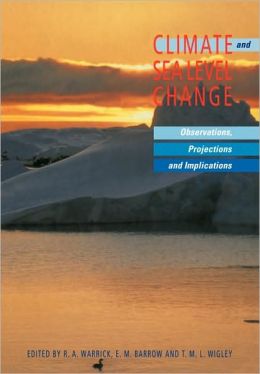
   Climate and Sea level Change: Observations, Projections and Implications is a book that came out back in 2009.  It talks, of course, about how climate change will effect sea level through evidence of past sea level rises and possible causes on different time-scales.There are projections on global mean temperatures for the coming century, sea-level rise estimates, as well as observations of greenhouse gas concentrations.  Several case studies are included along with other documents of regional and local areas where there are issues relating to sea level, physical environment, and economic effects are prevalent. 
     The book is currently on sale at Amazon where you can also read a description on the book as well as look 'inside' as well as Barnes & Noble.

Tuesday, April 23, 2013

Extreme Weather


This image was made as a ways to visualize a report from the Intergovernmental Panel on Climate Change that had been issued about extreme weather and climate change.  Since 2011 there have been many extreme weather events that have caused a lot of destruction throughout the world.  Overall climate change is leading towards higher temperatures, longer droughts, and heavier rain falls. 
Visual Guide for the Effects of Climate Change on Weather
Source: Extreme Weather Visual Guide

Fox, Maggie. "Extreme Weather: A Visual Guide - Climate Reality." Climate Reality. N.p., 5 Dec. 2011. Web. 23 Apr. 2013. <http://climaterealityproject.org/2011/12/05/extreme-weather-a-visual-guide/>.

Tuesday, April 9, 2013

Sea Levels


This infograph depicts the current and projections for sea level.  It also shows how many people are at risk from the rising sea levels in the United States, along with other random facts about sea level

"Rising Sea Levels." Infographics. Polarseeds, n.d. Web. 9 Apr. 2013. <www.polarseeds.org/uploads/1/3/0/5/13056389/sealevels-01.jpg>.